
You studied Japanese. You passed the JLPT. You finally landed in Japan — and suddenly everyone around you is saying things your textbook never once mentioned.
Or you’re scrolling Japanese Twitter and the replies are full of 草草草草. Someone’s crying and the comments say ぴえん. A post ends with wwww. None of it makes sense — until now.
This guide covers 8 real Japanese slang words you will hear and see constantly — what they actually mean, how to use them, and the generational fault lines you need to know before opening your mouth.
How to Learn Japanese Naturally
What Does “やばい” (Yabai) Mean in Japanese?
✓ Safe with friends
⚠ Avoid formal settings
Classically, やばい (yabai) was the word you used when something was seriously wrong — a sketchy neighbourhood, a shady deal, a situation you needed to exit immediately. Your grandmother’s version of yabai meant: run.
Today, it means any extreme intensity whatsoever. Shockingly good ramen? やばい. A horror film that left you shaking? やばい. Your friend’s outfit that literally stopped you mid-sentence? やばい. The word has swallowed the entire emotional spectrum. Context is now doing all the work that meaning used to do.
The key to reading it correctly: tone of voice, facial expression, and what came before it. A drawn-out やばぁい with wide eyes = delight. A short, clipped やばい with a frown = trouble. When in doubt, watch the face.
このラーメン、やばすぎる。
Kono ramen, yaba-sugiru.
“This ramen is insanely good.” (literally: too yabai to handle)

明日テストあるの忘れてた。やばい!
Ashita tesuto aru no wasureteta. Yabai!
“I completely forgot I have a test tomorrow. I’m done for.”

あの映画、普通にやばかった。
Ano eiga, futsuu ni yabakatta.
“That film was genuinely something else.” (positive — yes, “futsuu ni” here means “legitimately”)

Don’t use やばい in a job interview or with someone’s parents. It’s casual through and through. The business version of “that’s outstanding” is すばらしい (subarashii) — not yabai, no matter how yabai the quarterly results actually were.
What Does “えぐい” (Egui) Mean in Japanese?
⚠ Generation gap is real
The original えぐい (egui) described a bitter, acrid taste — the kind that makes your mouth feel wrong. From there it expanded to describe cruelty, harshness, or anything that left a bad feeling behind. A villain’s behavior was えぐい. An especially brutal manga plot twist was えぐい.
Then younger Japanese speakers did what they do best: they took something negative and pushed it so far it flipped. Now えぐい is widely used to express extreme impressiveness — particularly for skill, performance, or situations simply beyond normal comprehension. A basketball dunk that defies physics? えぐい. A study schedule so brutal it made everyone wince? Also えぐい.
The critical thing to understand: the generation gap here is live. For someone under 35, えぐい is likely a compliment. For someone over 55, it still sounds unpleasant. Use it in front of a Japanese teacher and watch their face very carefully.
あの選手のプレー、えぐくない?
Ano senshu no purē, eguku nai?
“Isn’t that player’s move insane?” (admiring, not criticizing)

この量、えぐい。食べ切れない。
Kono ryō, egui. Tabe kirenai.
“This portion is wild. There’s no way I can finish it.”
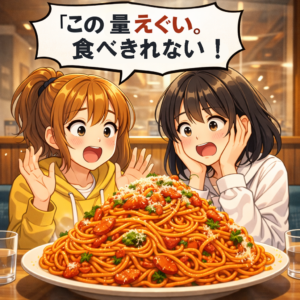
Say 「えぐい!」 to your Japanese teacher about their lesson and watch the reaction. Over 50? They will likely think you hated it. Under 30? They’ll probably be pleased. This is a live linguistic fault line — know which side your listener is on before you speak.
What Does “草” (Kusa) Mean in Japanese? — Japan’s “lol”
🖥 Online / text use
The origin story is wonderfully logical once you see it. Japanese internet users started using w as shorthand for laughter — from 笑い (warai), meaning “laughing.” Type enough of them in a row — wwwwwwww — and they start to look like grass sprouting from the ground. Someone noticed. Someone made the leap. And suddenly 草 (kusa) became the standard shorthand for “I am genuinely laughing at this.”
You’ll see 草 used exactly the way English speakers use 💀 or LMAO. The escalated form: 大草原不可避 (dai-sōgen fukahi) — literally “an unavoidable meadow of grass” — meaning you are absolutely dying of laughter and there is nothing to be done about it.
これ草すぎるwww
Kore kusa sugiru www
“This is too funny lmao” — doubling up kusa AND w for maximum effect
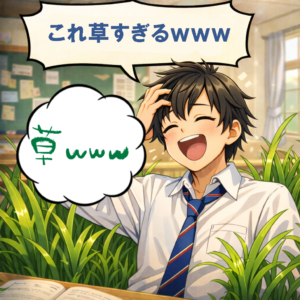
大草原不可避
Dai-sōgen fukahi
“The vast grassland is unavoidable” — internet speak for “I cannot stop laughing”

Do not say 草 out loud in conversation. It lives in text — comment sections, Twitter threads, LINE messages. Speaking it aloud to indicate laughter will read as strange, like reading an emoji out loud. Keep it typed.
The evolution from (笑)→ w → www → 草 → 大草原 is a perfect example of how internet slang compounds over time. Each generation inherits the previous layer and adds one more. Japanese internet linguistics is genuinely fascinating if you follow the thread.
Still confused about Japanese slang in real life?
Guidebooks don’t teach you what Japanese people actually say. Get honest, native-level answers from Kaori — not an algorithm.
What Does “エモい” (Emoi) Mean in Japanese?
✓ Crosses age groups
エモい (emoi) comes directly from the English word “emo” — but Japan took the concept and gave it a gentler, more specifically Japanese emotional texture. In English, “emo” carries connotations of teenage angst and dark eyeliner. In Japanese, エモい describes something closer to mono no aware — that bittersweet, nostalgic feeling you get when a moment is beautiful precisely because it is passing.
A sunset settling over rice paddies. An old song that surfaces a memory you forgot you had. The last few seconds of a summer festival before the lights go out. These are エモい moments — tinged with beauty, tinged with loss, and somehow both at once.
What’s interesting: エモい has crossed generational lines more successfully than most slang. The feeling it describes is universal enough that even older generations recognise and accept the word. It has earned cultural legitimacy that most slang never achieves.
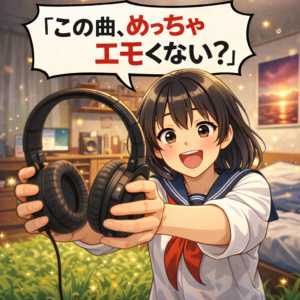
この曲、めっちゃエモくない?
Kono kyoku, meccha emoku nai?
“Doesn’t this song just get you right in the feelings?”
卒業式、エモすぎて泣きそう。
Sotsugyōshiki, emo sugite naki-sō.
“Graduation is so bittersweet I’m about to cry.”
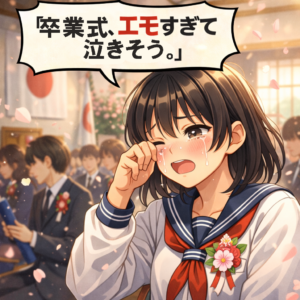
The closest English phrase to エモい is probably “it hits different” — that specific emotional resonance that’s hard to explain but immediately understood when you feel it. If you’ve ever stood somewhere beautiful and felt a quiet ache you couldn’t name, that’s エモい. Japan has a long tradition of honouring exactly that feeling.
What Does “ぴえん” (Pien) Mean in Japanese? — Crying, But Make It Cute
⚠ Younger / women’s speech
ぴえん (pien) is the sound of a particular kind of crying — not the heaving sob of genuine tragedy, but that soft, breathless, pouty whimper. The kind that comes with scrunched eyebrows and trembling lips. The emoji it naturally pairs with is 🥺 — which should tell you everything about the emotional register we’re working in.
It’s used when something is sad, frustrating, or disappointing — but almost always with a layer of humour or self-awareness. You forgot your umbrella and it’s raining: ぴえん. Your favourite limited-edition snack sold out: ぴえん. The upgraded form is one of modern Japanese slang’s finest achievements: ぴえんを超えてぱおん — “Beyond crying, I have transcended into paon.” Paon is the sound an elephant makes. It means: I am beyond help. I am devastated in ways that have left language behind.
財布忘れた。ぴえん。
Saifu wasureta. Pien.
“I left my wallet at home. I want to cry. 🥺”

推しが卒業するってぴえん…
Oshi ga sotsugyou suru tte pien…
“My oshi is graduating (leaving the group)… pien…”

ぴえんを超えてぱおん
Pien wo koete paon
“I’ve gone beyond crying. I am now an elephant.” — absolute devastation
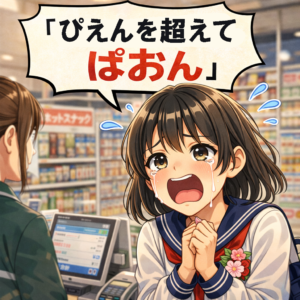
ぴえん peaked around 2020–2021 and is now considered slightly dated by cutting-edge Japanese internet users — the equivalent of still saying “on fleek.” A middle-aged businessman saying ぴえん in a meeting would land somewhere between baffling and uncomfortable. It’s still widely understood, but know your audience.
What Do “それな” and “わかりみ” Mean? — “Same” and “I Feel That”
✓ Widely used
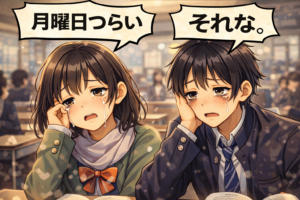
それな (sorena) is the Japanese internet’s shorthand for strong agreement — “that’s exactly it,” “same,” “you took the words out of my mouth.” It comes from sore (that) + the Kansai dialect particle na (isn’t it / right). It spread from Osaka internet culture to become standard across Japanese social media.
わかりみ (wakarimi) takes the verb wakaru (to understand) and adds the suffix -mi, turning it into a noun meaning “the feeling of understanding deeply.” The -mi suffix became its own trend — つらみ (tsurami) = “the feeling of hardship,” たのしみ in this context = “the vibe of fun.”
月曜日つらい → それな
“Mondays are hard” → “Sorena” — the universal reply to any relatable complaint
この感じ、わかりみが深い
Kono kanji, wakarimi ga fukai
“I deeply relate to this feeling”
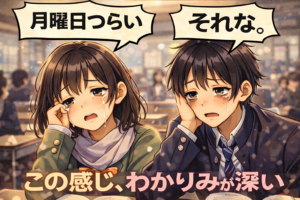
The -mi suffix trend is a perfect example of Japanese internet creativity — taking an existing verb and nominalising it into a “vibe” or “feeling.” It’s playful grammar that somehow perfectly captures specific emotional texture. Only Japanese could make this work so naturally.
What Do “ガチ” and “マジ” Mean in Japanese? — “For Real” at Two Intensities
✓ Safe with friends
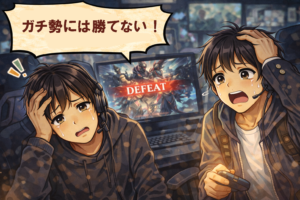
ガチ (gachi) comes from gachinko — a sumo term for a genuinely competitive match with no predetermined outcome. Online it means something is completely real, serious, or unironic. ガチ恋 (gachi koi) = genuinely falling in love with an idol. ガチ勢 (gachi-sei) = hardcore players or fans who take things very seriously.
マジ (maji) is the everyday “seriously?” / “for real?” — lighter than gachi, used constantly in casual speech. マジか (maji ka) — “are you serious?” — is one of the most common reaction phrases in Japanese. Stack them: マジでガチ (maji de gachi) — “seriously, for real” — when something is so genuine it needs double confirmation.
マジか、それガチでやばい
Maji ka, sore gachi de yabai
“For real? That’s genuinely insane.” — casual disbelief + genuine emphasis

ガチ勢には勝てない
Gachi-sei ni wa katenai
“You can’t beat the hardcore fans/players.” — respect and resignation
The “-み” Suffix Trend — Turning Feelings Into Things
⚠ Internet / younger generations
One of the most creative patterns in Japanese internet slang: taking an adjective or verb and adding -み (-mi) to turn it into a noun meaning “the feeling/vibe of X.” Once you see it, you’ll spot it everywhere.
つらみ (tsurami) — from つらい (tsurai, “hard/painful”) → “the feeling of hardship.” やばみ (yabami) — from やばい → “the vibe of yabai.” わかりみ (wakarimi) — from わかる (wakaru, “to understand”) → “the feeling of deep relatability.”
It makes abstract feelings into something tangible and holdable — which is exactly why the internet loved it immediately.
今日はつらみしかない
Kyou wa tsurami shika nai
“Today is nothing but the feeling of hardship.” — soft complaint, online register

このご飯、やばみある
Kono gohan, yabami aru
“This food has major yabai vibes.” — enthusiastic but softened

The -み suffix is a perfect example of Japanese internet creativity: playful grammar that somehow perfectly captures specific emotional texture. Once you understand the pattern, you can decode (and even invent) new -み words in real time. Only Japanese could make this work so naturally.
Oshi, Numa, Emoi — Japanese Fandom Words That Took Over the Internet
🗒 Quick Reference — 8 Japanese Slang Words Cheat Sheet
| Slang | Core Meaning | When to Use | Watch Out |
|---|---|---|---|
| やばい | Amazing / terrible / intense (context decides) | With friends, casual situations | ❌ Formal / business settings |
| えぐい | Extreme / impressive (positive, younger) / harsh (older) | Casual praise among under-40s | ⚠ Generation gap — read the room |
| 草 / w | lol / laughing | Text only — comments, LINE, X | ❌ Don’t say it out loud |
| 大草原不可避 | Dying of laughter — unavoidable | When 草 isn’t enough | Text only |
| エモい | Bittersweet / nostalgic / hits different | Any age, widely accepted | ✓ Safest slang on this list |
| ぴえん | Sad / crying (cute, theatrical) | Casual, online, younger speech | ⚠ Dated since 2022+ |
| ぱおん | Beyond ぴえん — full devastation | Escalation from ぴえん | Same demographic caveat |
| それな | Same / exactly / I agree | Reply to any relatable complaint | ✓ Very safe, widely used |
| わかりみ / つらみ | The feeling/vibe of X (-mi suffix) | Online, casual text | ⚠ Internet register only |
| ガチ | Serious / genuine / for real | Emphasise something is real, unironic | ✓ Broadly understood |
| マジ | Really? / seriously? / for real? | Everyday disbelief or emphasis | ✓ Most common of all |
Why Does Japanese Internet Slang Evolve So Fast?
Japanese internet slang moves faster than almost any other language’s equivalent — and there are structural reasons for this. Japanese writing uses three scripts (hiragana, katakana, kanji) plus Roman letters, which means slang creators have four different systems to play with simultaneously. The same sound can be written multiple ways, each with different connotation and aesthetic feel.
Japanese internet culture also has a strong tradition of creative wordplay — 言葉遊び (kotoba asobi) — that goes back centuries. Puns, portmanteaus, and repurposed kanji are as natural as breathing. Online, this creativity accelerates. A new term can go from niche community joke to mainstream slang in weeks, and be considered dated a year later.
Every one of these words has one thing in common: they require you to know your audience before you open your mouth. Japanese is not just a language — it’s a social system. The same word can land as a warm compliment, a casual joke, or a genuine insult depending on who is speaking, who is listening, and what generation, gender, and region they’re coming from.
The best way to stay current is to follow young Japanese creators on TikTok or X directly — not translated content, the originals. Even if you can’t read everything, you’ll start recognising patterns, new terms, and the emotional register they’re used in. Passive immersion works.
FAQ: Japanese Slang
Both — and neither. Context decides entirely. A drawn-out やばぁい with wide eyes = delight. A short clipped やばい with a frown = trouble. It’s the most context-dependent word in modern Japanese slang.
For people under ~35, yes — it usually expresses awe or impressiveness. For people over ~55, it still sounds negative or harsh. Check your audience before you use it.
Neither — it’s a neutral reaction to something funny, the exact equivalent of “lol” or 😂. The context of what’s being laughed at carries the tone, not the word itself.
Not recommended. Japanese social interaction is highly context-sensitive, and slang is best used with friends or in casual online spaces. Using ガチ or 草 with someone you’ve just met — especially in a business or semi-formal setting — will read as oddly informal or even disrespectful.
Yes, but it’s showing its age. It peaked around 2020–2021 and is now understood by everyone but considered slightly retro by younger users. Think of it the way English speakers think of “YOLO” — still recognisable, slightly cringe to use unironically.
Following young Japanese creators directly on X (Twitter) or TikTok is the fastest route. For deeper explanations with native context — who uses it, when it’s appropriate, what generation it belongs to — you can also ask Kaori directly. Just $1 per question.
Got a Japanese Word You Don’t Quite Trust Yet?
Ask Kaori directly — get a real, honest breakdown by age, gender, dialect, and social context. Not a robot. Not an algorithm. Just Kaori.
Found this useful? Share it with someone who’s learning Japanese — the えぐい section alone might save them from an awkward moment. 🌿